
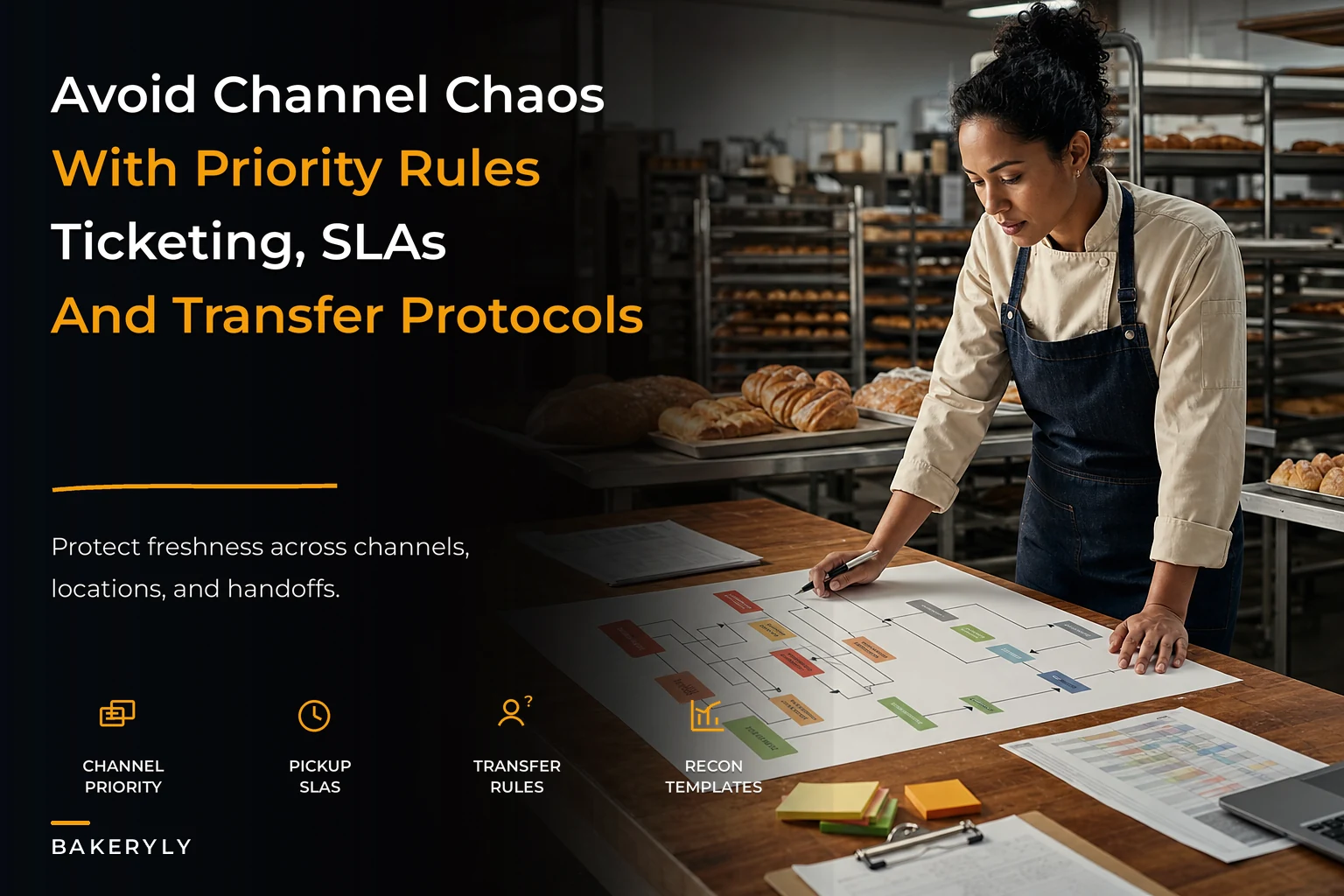

Running bakery multi-channel fulfillment without proper governance is like playing whack-a-mole with orders. Just when you've figured out cafe operations, wholesale orders start flooding in and conflicts emerge across locations and channels.
The real mess often happens mid-morning on Saturdays when cafe rush, farmers market pickup, wholesale deliveries, online orders, and inter-site transfers all compete for the same batch of product. Informal spreadsheets and group texts rarely scale; they become outdated and ignored within weeks.
The hidden complexity of perishable SKU routing
Perishable SKUs create a fundamentally different allocation problem than non-perishables: shelf life is measured in hours, not weeks, and each channel has different freshness expectations.
Example: pain au chocolat baked at 6am may need to satisfy a cafe rush at 6:30am, a wholesale pickup at 7am, online pickups at 8am, and inter-site transfers by 9am. Every allocation decision cascades through the rest of the day.
SKU shelf life varies: bread may hold two days, pastries one day, and cream-filled items only a few hours. Without clear prioritization, staff make hundreds of micro-decisions based on whoever is loudest, which creates repeated shortages and resentment.
Channel prioritization matrix for perishable goods
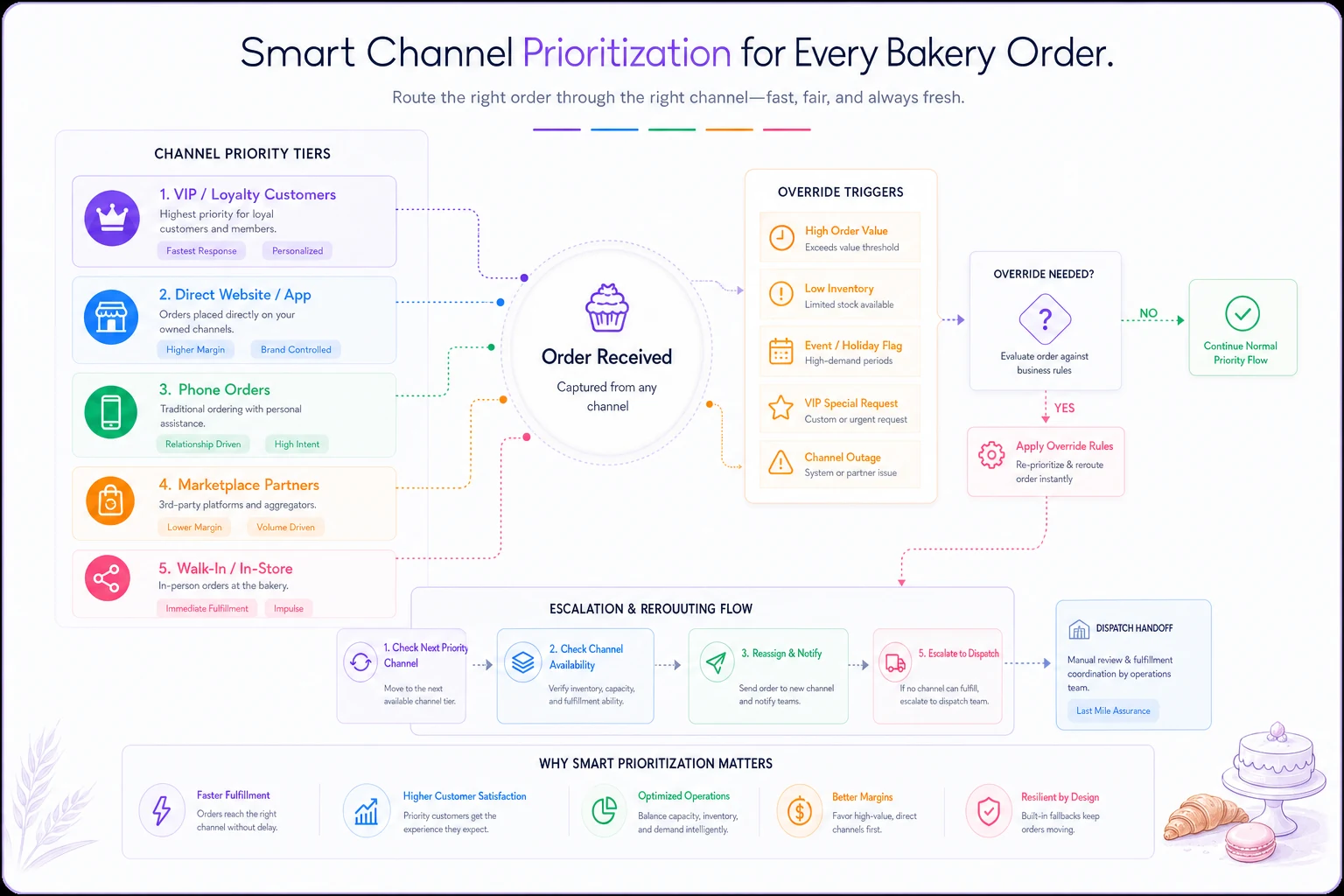
Use a simple, posted prioritization matrix that the team follows without negotiation. Keep it short and visible at production and dispatch points.
Never miss a bake or delivery again.
Bakeryly helps you schedule, track, and manage every order effortlessly.
- Unified order tracking
- Real-time inventory alerts
- Staff shift management
No credit card required
-
Priority Level 1 — Pre-committed inventory
subscription boxes; catering orders with deposits; standing wholesale contracts with penalties
-
Priority Level 2 — High-margin captive channels
main cafe retail; owned farmers market stands; direct online same-day pickup
-
Priority Level 3 — External channels
wholesale accounts; third-party delivery platforms; consignment locations
-
Priority Level 4 — Internal transfers and discounts
secondary locations; day-old discount racks; staff purchases
Define override triggers (for example, when the cafe is projected to run out before noon) and absolute caps (for example, wholesale cannot exceed X% of production). Post the rules and require staff to reference them when reallocating.
Post the prioritization matrix at production, dispatch, and in every channel order system to make allocation decisions non-negotiable.
The ticket system that prevents allocation chaos
Physical color-coded tickets attached at production time make allocations obvious on the floor and create an audit trail that digital systems often miss.
-
Red — Priority 1 orders (pre-committed/subscriptions)
-
Yellow — Priority 2 (cafe display and high-margin channels)
-
Green — Priority 3 (wholesale and third-party pickup)
-
Blue — Priority 4 (internal transfers and discounts)
Example batch ticketing: 15 red for subscriptions, 25 yellow for cafe, 15 green for wholesale pickup, 5 blue for transfers. Collected tickets reconcile against fulfilled orders to surface patterns and unauthorized reallocations.
Pickup windows and SLA enforcement
Define realistic pickup windows based on production flow and enforce them consistently. Begin with warnings, then apply penalties for chronic violations.
-
Wholesale
7am–9am (after morning bake, before cafe rush)
-
Online orders
8am–6pm (hourly slots, capacity-limited)
-
Farmers market
6am–6:30am (tight window, no exceptions)
-
Inter-site transfers
9am and 3pm (twice daily scheduled runs)
Enforcement examples: late wholesale pickups forfeit their allocation after 30 minutes; online orders uncollected after two hours are cancelled and refunded. Require deposits or forfeiture rules for repeat offenders.
Allow limited emergency exceptions (for example, one emergency late pickup per account per quarter with advance notice) but document and track exceptions to prevent gaming of the system.
Inter-site transfer protocols that preserve quality
Transfers require manifests that record counts and condition checks; both sending and receiving locations must sign off to surface discrepancies immediately.
-
Product name and quantity ordered
-
Quantity actually available for transfer
-
Time removed from display or storage
-
Temperature at pickup for temperature-sensitive items
-
Packaging condition and expected arrival time
-
Driver name and vehicle identifier
Both locations confirm what left and what arrived. Discrepancies are flagged immediately instead of being discovered at end-of-day reconciliation.
Temperature control is non-negotiable for cream-filled items. Small bakeries can use insulated containers with frozen gel packs in summer and heat packs in winter; measure arrival temperature and dispose above safe thresholds.
Regulatory note: consult FDA guidance for traceability and time‑temperature benchmarks. See FSMA Traceability FAQ and FDA cooling guidance for required KDEs and timelines.
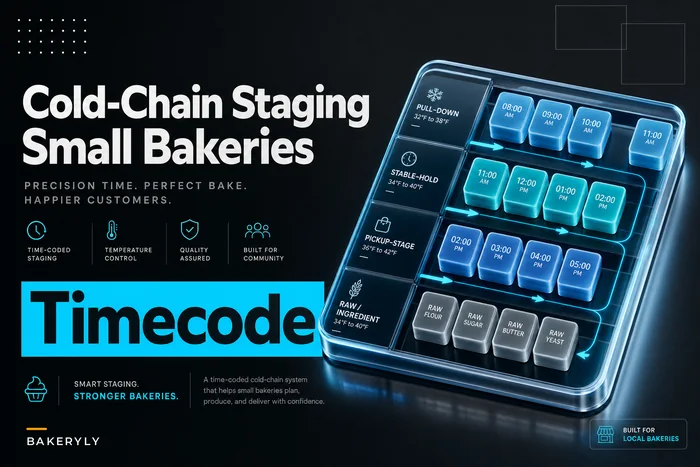
Download Bakeryly's ready-to-use operational workbook (ticket schema, transfer manifest, reconciliation ledger): FDA/FSMA traceability and time‑temperature guidance. For transfer and handoff practices, see our guides on cold‑chain staging and driver handoff & proof‑of‑delivery SOP.
Reconciliation templates for multi-channel operations
Standard POS reconciliation misses channel conflicts, short shipments, quality issues, and transfer losses. Use templates that capture allocations, fulfillment, variances, and dispositions.
| Product | Produced | Cafe Allocated | Cafe Sold | Wholesale Allocated | Wholesale Delivered | Transfer Allocated | Transfer Completed | Variance |
|---|---|---|---|---|---|---|---|---|
| Croissants | 120 | 50 | 48 | 40 | 35 | 30 | 30 | -3 |
| Sourdough | 60 | 30 | 30 | 20 | 20 | 10 | 8 | -2 |
Any variance over 5% should trigger a documented root-cause investigation. Three consecutive days of similar variance should trigger a process review and corrective action.
The reconciliation should also capture quality issues from transfers and deliveries so patterns surface in structured data rather than buried in complaint emails.
The freshness window problem nobody talks about
Different channels perceive freshness differently. Map each SKU's freshness perception window by channel and use that map to drive production scheduling.
-
Croissants — Cafe display
0–4 hours from oven; Wholesale: 0–8 hours; Online pickup: 0–12 hours; Second location: 2–6 hours
-
Custard Danish — Cafe display
0–2 hours; Wholesale: not offered; Online pickup: 0–3 hours; Second location: 0–2 hours
Use the freshness map to decide which SKUs get multiple small bakes throughout the day and which can be batch-produced early.
Adjust your production system to respect channel-specific freshness windows rather than a single shop-wide timeline.
Why the 'smart manager' routing method fails
Relying on a single skilled manager to dynamically route product works until that person is absent or makes a poor judgment. The result is inconsistent performance between staffed and unstaffed days.
Replace unbounded judgment with bounded decision rules: allow managers limited reallocation authority with required documentation and outcomes tracking.
-
Allow reallocations up to a fixed percentage (for example, 20%) after core allocations are met
-
Require documented overrides with reason codes and expected outcomes
-
Review overrides regularly and adjust rules based on data
Technology integration without complexity
Most breakdowns happen between disconnected systems (POS, wholesale orders, online platform). Start by integrating allocation tracking and conflict alerts rather than automating everything at once.
Modern platforms can unify sources and flag conflicts before production. Build trust with a simple alerting layer and expand automation as the team accepts system recommendations.
AI can also reduce reconciliation burden by automatically identifying discrepancies and recurring patterns that require process changes.
Special handling for seasonal and limited items
Limited items need concentrated launches and pre-allocation rather than proportional splitting across channels, which leaves everyone under-served.
-
Week 1
Main cafe only to build buzz
-
Week 2
Add online ordering
-
Week 3
Add wholesale with strict limits
-
Week 4
Allow inter-site transfers to secondary locations
For highly seasonal items, require deposits and pre-orders two weeks in advance and allocate capacity based on confirmed orders, leaving a small percentage for walk-in sales.
The compounding effect of small fulfillment mistakes
Small allocation errors compound: one short wholesale delivery can reduce future orders, and repeated cafe stockouts push customers to competitors. Mistakes trigger behavioral changes that increase waste and reduce margin.
Governance structures contain mistakes by documenting overrides, surfacing root causes, and preventing informal re-routing that hides the true problem.
Building your governance playbook
Start small: pick the single biggest channel conflict, document the current state, and create a minimal rule set to stabilize that conflict before expanding.
-
Define standard allocations by channel
-
Create override triggers and limits
-
Establish pickup windows and penalties
-
Build basic reconciliation tracking
-
Set review cadences for adjustments
Test rules for two weeks without other changes, track what gets ignored, and refine based on actual behavior rather than theoretical ideals.
Practical next steps for implementation
Roll out governance incrementally so staff can adapt and you can learn from real operating data.
-
Week 1–2
Document current channel volumes and real allocations
-
Week 3–4
Create initial prioritization matrix and test on paper
-
Week 5–6
Launch physical ticketing for high-value items
-
Week 7–8
Enforce pickup windows with warnings then penalties
-
Week 9–10
Implement daily channel reconciliation tracking
-
Week 11–12
Refine allocations, windows, and expand scope
Use two months of operational data to adjust rules and decide where technology can remove repetitive coordination work.
When multi-channel complexity demands system support
Manual governance scales only so far. Signs you need system support include long reconciliation times, frequent owner intervention, staff spending more time coordinating than producing, and regular allocation failures.
AI-assisted platforms can predict demand, optimize production schedules, and route product automatically—provided you've already defined priorities, windows, and transfer protocols.
The payoff of proper channel governance
With structured governance, wholesale complaints drop, online fulfillment rates improve, and transfers become predictable. You gain the ability to grow—add locations, accept larger wholesale accounts, and expand online reach—confident your operations will hold.
Governance reveals which channels are truly profitable once you account for labor, logistics, and opportunity costs. Most importantly, it removes the daily stress of channel chaos and makes the business less dependent on any single person's judgment.
Start with one channel conflict, build simple, posted rules, and expand incrementally. Use ticketing, pickup windows, transfer manifests, and reconciliation templates to make decisions visible, contain mistakes, and enable growth.
Ready to elevate your bakery operations?
Join 2,000+ bakeries using Bakeryly to streamline workflows, reduce waste, and delight more customers.